World Cup 2026 tactical preview: Spain enter as tactical favorites for World Cup 2026, deploying a 4-3-3 built on midfield control, wide one-on-one threats via Lamine Yamal and Nico Williams, and deep positional structure. France offer the strongest squad depth with a counter-attacking 4-2-3-1 centered on Mbappé. England, Argentina, and Brazil complete the top tier, each with distinct tactical identities that could take them deep into the tournament.
Key Takeaways
- The 48-team format rewards squad depth and tactical flexibility over one-dimensional approaches
- Spain’s 4-3-3 possession structure — anchored by Rodri and fired by Lamine Yamal — makes them the technical favorites
- France’s counter-attacking model under Deschamps is underrated; Mbappé’s spatial positioning reshapes defensive plans before a ball is kicked
- England’s Tuchel era has produced a compact, disciplined shape — but the omission of Foden and Palmer leaves questions in tight spaces
- Brazil under Ancelotti have quietly shifted to a structured counter-attacking game, abandoning the chaotic creativity of recent cycles
- Argentina’s Scaloni is a tactical chameleon whose collective pressing and fluid formations remain genuinely hard to prepare for
- Set-piece optimization, hybrid formations, and rest defense will likely decide knockout matches
Why This World Cup Is Different
There is a moment in every generation of international football when the tournament format itself becomes a tactical variable. For Qatar 2022, it was the compressed schedule and extreme heat that made squad rotation a survival tool. For the 2026 FIFA World Cup, spread across the United States, Mexico, and Canada with 48 teams, 104 matches, and a group stage that guarantees at least three games for everyone, the variable is something more fundamental: depth.
For the first time in the sport’s history, nations must prepare not just for seven or eight knockout matches but potentially eight or nine, with less margin for the kind of physical attrition that previously allowed a compact eleven to grind to a final.
The expansion from 32 to 48 teams — introducing a new third-placed knockout round and a reconfigured knockout bracket — has changed the risk-reward calculus for every coach in the draw.
This is the essential starting point for any serious world cup 2026 tactical preview: the old formulas for tournament success, where a single settled system and a reliable starting eleven might be enough, have been stress-tested in a way they never were before. Tactical flexibility, the ability to shift shape without losing identity, and the depth to sustain high-intensity pressing across a longer campaign have become non-negotiable requirements.
International football has also evolved considerably since Lionel Messi lifted the trophy in Lusail. The positional play concepts that transformed domestic football have now fully permeated international coaching. Positional play — the occupation of specific areas to create numerical or spatial superiority — is no longer the sole preserve of Barcelona and Manchester City alumni.
Coaches like Luis de la Fuente, Didier Deschamps, and Thomas Tuchel have each found their own interpretations. Meanwhile, the counter-pressing revolution, which Jürgen Klopp popularized and which every elite club now practices in some form, has made the transition phase the most contested ground in global football.
What follows is a detailed analysis of how the major contenders plan to win, what tactical problems they will pose their opponents, and where their vulnerabilities might be exposed on the largest stage the game has ever seen.

The Tactical Trends That Could Define World Cup 2026
Before examining individual nations, it is worth understanding the macro-tactical landscape — the trends that will shape how teams interact across the tournament.
High pressing systems have matured from an aggressive novelty into the baseline expectation at the top level. The question in 2026 is not whether a team presses but when and where. Trigger-based pressing — launching a coordinated press only when a specific cue appears, such as a goalkeeper receiving a back-pass or a center-back receiving under pressure — has replaced the exhausting man-for-man traps that burned out squads in shorter tournaments. In a 48-team, multi-month format, managing press intensity will be as important as executing it.
Hybrid formations are now standard. A team might defend in a 4-4-2, attack in a 4-3-3, and transition through a 3-2-5. Understanding what a team actually looks like in each phase — rather than how its lineup card reads — is where genuine tactical analysis begins. For an explanation of why formation labels can be misleading, see our guide to What Is Positional Play.
Inverted fullbacks have fundamentally changed how possession phases are constructed. Rather than providing width from deep positions, the inverted fullback moves into the central midfield zone during build-up, creating an additional body in the progression lane. Inverted fullbacks essentially allow a team to play with five midfielders while maintaining the defensive structure of a back four. England’s Reece James epitomizes this under Tuchel; Theo Hernandez serves a similar function for France.
Build-up structure determines how comfortable a team is when pressed. Nations that can play through a press from goalkeeper to final third — Spain, Germany, Portugal — have a significant advantage in the tournament’s tight spaces. Those who rely on direct long balls face a different risk-reward calculation.
Rest defense, the pre-organized defensive shape that a team establishes before losing possession, has become a crucial separating factor. The double pivot — two holding midfielders protecting the central channel — is the most common solution, but the most sophisticated teams use a single pivot with intelligent zonal responsibilities that free the more dynamic midfielders to press higher.
Transition football may ultimately determine the winner. Teams that score from fast breaks — France, Brazil under Ancelotti, Argentina — can beat possession-heavy opponents without ever matching them on the ball. The expansion of the tournament only amplifies this, because fatigue and tactical entropy make transitions more frequent in later rounds.
Set-piece optimization has undergone its own tactical revolution since Qatar 2022. Delivery zones, blocker-runner combinations, and opposition-specific analysis have made dead balls a genuine avenue for tactical dominance. In a knockout game between two well-organized sides, a set-piece goal may be the only way through.

Spain — Tiki-Taka 2.0 or the Yamal Era Pressing Machine?
Spain enter the 2026 World Cup as bookmakers’ favourites, and the tactical case for their candidacy is compelling. Under Luis de la Fuente, who succeeded Luis Enrique after the disappointing Qatar 2022 exit, La Roja did not merely win Euro 2024 — they won it playing the most aesthetically complete football of any team in the tournament. The question heading into North America is whether that template can withstand the pressure of a longer, more demanding competition.
Tactical Identity
De la Fuente has retained Spain’s foundational 4-3-3 structure, the formation so deeply embedded in the country’s development pathways that it feels less like a coach’s choice than a national inheritance. But this is not the slow-paced possession carousel of the 2010 vintage. Spain’s 2024 model added genuine verticality — the willingness to bypass the midfield with incisive forward passes when the window opens — and significantly higher pressing intensity off the ball.
The possession structure is built around the midfield triangle. Rodri, the 2024 Ballon d’Or winner now recovered from his ACL injury, anchors the base of the three. His defensive intelligence — his ability to read spaces before they open and position himself to cut off counter-attacks before they begin — creates the security that allows Pedri and Fabián Ruiz to advance. Pedri, at 23 already operating as one of the world’s most complete central midfielders, excels in the half-spaces — the channels between the wide forwards and the center — where his ability to receive under pressure and play at pace unlocks defensive structures. Fabián Ruiz brings forward thrust and a powerful shot from range.
The Yamal Effect
The tactical conversation around Spain, however, inevitably returns to one name: Lamine Yamal. Still only 18 years old at the time of the tournament, the Barcelona winger has already won two La Liga titles and multiple individual awards. His positioning on the right flank, where he regularly receives the ball in one-on-one situations against opposition left-backs, provides Spain with a threat that no defensive system has consistently solved. At Euro 2024, opposition coaches were forced to choose between dropping an extra defender toward him — thus weakening their central structure — or accepting that Yamal would regularly isolate and beat his man. Either concession is damaging.
Nico Williams occupies the corresponding role on the left. The combination of two explosive, technically elite wide players who can cut inside or run the line gives Spain’s attack a dual unpredictability that most possession teams lack. The overlapping fullbacks — Marcos Llorente and Marc Cucurella — provide the width when Yamal and Williams invert, creating the four-against-three situations in the final third that de la Fuente’s system is designed to manufacture.
Strengths and Weaknesses
Spain’s strengths are self-evident: midfield quality that is arguably the deepest in world football, wide players capable of winning individual duels at elite level, and a collective pressing system that can squeeze opponents in their own half. Their defensive record in Euro 2024 qualifying and the tournament itself was exceptional — conceding just eight goals across 14 qualifying matches, a figure that reflects the protection afforded by the midfield’s zonal discipline.
The vulnerabilities are more subtle. A team this committed to possession can be disrupted by high-intensity pressing before the first line of defense establishes itself. In knockout football, where opponents specifically prepare for Spain’s build-up triggers, the reliance on Rodri’s positioning to protect against transitions becomes critical. If Rodri is not fully fit — his return from a long-term ACL injury makes his conditioning a live concern — Zubimendi or Merino would step in, capable deputies but not his equal in reading transitions.
Spain are also vulnerable to the question every possession team faces at a World Cup: can they win a match when they are not dominant? At Euro 2024, de la Fuente’s ability to adjust and defend a lead was tested and passed. Whether it holds against the best counter-attacking teams in the world, when the tournament is deeper and the tactical attention more sustained, is the central tactical question for La Roja in 2026.
Tactical Ceiling
Spain’s ceiling is as high as any team in the tournament. If Rodri is fit, Yamal is fit, and the midfield functions as designed, La Roja have the tactical architecture to control knockout matches against any opponent. Their ability to dominate without becoming predictable lies in the individual creativity of Yamal and Williams — two players who make the unpredictable look natural.

France — Mbappé Dependency or the Most Complete Squad?
The question asked about France before every major tournament is the same: is this the year everything comes together? And the frustration for neutral observers is that the question remains largely unanswered even after two consecutive World Cup finals. France reach the deepest rounds by being difficult to beat. What they have rarely done under Deschamps is produce football that suggests they are functioning as a coherent tactical unit at the peak of their collective ability.
Preferred Shape and Philosophy
Deschamps, in his final tournament before stepping down after 14 years as manager, has consistently operated a 4-2-3-1 or 4-3-3 depending on the phase of play and the opponent. The double pivot of Tchouameni and Rabiot — or in certain configurations, Kanté and Tchouameni — provides the structural rigidity that Deschamps has always prioritized. France will not be beaten by a single transition, by a single forward bursting through the midfield, because those two players exist specifically to prevent it.
The genius of Deschamps’ system, however, lies not in how France look in possession — which can sometimes appear tentative — but in how they look when they lose it. France’s rest defense is among the most sophisticated in world football. Before the ball is even played forward, Mbappé is positioned high and wide, not as a press trigger but as a permanent counter-attacking reference. FIFA’s tactical analysis of France’s 2022 campaign highlighted how this positioning forced opponents to dedicate at least one defender to tracking Mbappé even when France didn’t have the ball — effectively reducing the opposition’s available pressing bodies by one before the game even started.
The Mbappé Question
Is France too dependent on Mbappé? The honest answer is that the question is slightly wrong. Deschamps’ system does not use Mbappé as a conventional center-forward around whom everything must flow. It uses him as a spatial threat whose mere presence reorganizes the opposition. The goals and assists matter; the repositioning of 80,000 defensive calculations per match matters equally.
What France lack in 2026, with Antoine Griezmann retired from international duty, is a second creative orchestrator. Griezmann was the connective tissue between France’s midfield and attack — the player who found the pockets of space behind the opposition’s defensive line and connected Mbappé, Dembélé, and whichever striker Deschamps deployed. His absence means France must ask Dembélé or Michael Olise to perform functions that are not natural to either.
Squad Depth and Transitional Threat
Where France are unambiguously the strongest team in the tournament is in squad depth. Saliba and Upamecano at center-back represent an elite pairing — physical, comfortable in possession, and dominant aerially. Theo Hernandez at left-back is one of the most complete fullbacks in European football. The forward options — Mbappé, Dembélé (2025 Ballon d’Or winner), Olise, Doué — represent a depth of attacking talent that no other nation can match. Deschamps does not need to start his best front four simultaneously; he can alter the dynamic from the bench in ways that will be genuinely difficult to defend against.
France’s transition football, built around Mbappé’s pace and Olise’s direct dribbling, is the most threatening in the tournament. The compact defensive shape that Deschamps has refined across a decade and a half means France concede very little from open play, which means their transition moments — when they do arrive — tend to be decisive. Against Spain’s possession dominance, these transitions represent the most compelling tactical matchup of the tournament.
The most balanced contender? In terms of raw squad depth, almost certainly yes. Whether Deschamps assembles that depth into a system that expresses its full potential — or whether France again win by being hard to beat rather than impossible to play against — will define his legacy.
England — Why Do Elite Players Struggle to Become an Elite Team?
This is the question English football has been asking, with increasing urgency, for longer than most of the current squad have been alive. At Euro 2024, under Gareth Southgate, England reached the final with performances that were, in the diplomatic assessment of most analysts, workmanlike. They arrived in Germany with arguably their most talented generation since 1966 and left narrowly beaten by Spain, never having convincingly answered the question of how their elite individuals were supposed to function as a collective unit.
Thomas Tuchel, appointed in January 2025, has spent eighteen months attempting to answer that question. His record in qualifying — eight wins from eight, 22 goals scored, none conceded — is remarkable. Whether the system behind those numbers can survive elite knockout pressure is unknown.
The Tuchel System
Tuchel’s preferred shape is a 4-2-3-1 or, in possession, a fluid 3-2-5 structure. Declan Rice anchors the midfield as the deepest of the central players, though Tuchel has shown a preference for pushing Rice into the left half-space of a box midfield when Elliot Anderson drops as a dedicated six — a dynamic that made Rice arguably England’s best player at Arsenal, operating as a second-phase ball-carrier rather than a pure defensive shield.
Jude Bellingham operates as the number ten. At 22, in his second World Cup, Bellingham remains England’s most technically complete midfielder — a box-to-box player with the capacity to control games and the late-run threat that makes him genuinely difficult to mark. Bukayo Saka on the right and Harry Kane leading the line complete a spine that, on paper, is among the strongest in the tournament.
The Unanswered Question
The tactical controversy surrounding Tuchel’s squad selection — the omission of Phil Foden, Cole Palmer, and Trent Alexander-Arnold among others — is not merely a selection debate but a tactical statement. Tuchel has determined that the players who provide close-control creativity in tight central spaces, the kind required to unlock organized defensive blocks, are not compatible with his preferred system. Whether that judgment is correct will only be tested when England meet a team that defends deeply and forces them to find solutions without the specific tools Foden and Palmer provide.
England’s build-up is heavily reliant on wide play. Saka on the right provides craft and consistency; the left-flank options behind him are less certain. Against organized pressing teams — Germany, Portugal, and potentially France or Spain in the knockouts — England’s ability to progress through the midfield without resorting to long balls will be scrutinized.
The defensive shape is excellent. Saliba-level center-backs they are not, but Guehi and Stones provide solid, positionally intelligent defending. Jordan Pickford, once a subject of reasonable debate, has matured into a keeper with real distribution quality under Tuchel. England will not be beaten easily.
What England must do differently in 2026 is solve the paradox that has haunted them for decades: they have the players to control matches, but they rarely produce the football that controls matches. Tuchel has the tactical intelligence. The question is whether, without the specific creators he has omitted, he has the tools.

Brazil — Has Jogo Bonito Returned?
The honest answer is no — but what has arrived in its place may be more sustainable. Carlo Ancelotti’s Brazil are not attempting to resurrect the free-flowing, improvisational football of Ronaldinho and Rivaldo. Vinicius Junior himself revealed the approach in the weeks before the tournament: defend well and hit on the counterattack. For some Brazilian fans, this represents a tactical betrayal. For the squad assembled in North America, it may represent their clearest path to a first World Cup since 2002.
Tactical Evolution
Ancelotti has organized Brazil’s structure around the principles that have made him one of the most successful club coaches of his generation: a compact defensive shape, efficient progression through technical individual players, and devastating exploitation of transition moments. The 4-2-3-1 or 4-4-2 that Brazil deploy off the ball drops into a genuine mid-block — teams are allowed to build up to the halfway line before Brazil engage — with Vinicius’s energy used specifically in the counter-attack phase rather than the possession phase.
This represents a departure from Brazil’s recent World Cup cycles. In 2022, Tite’s Brazil had the ball more than almost any side in the tournament but lacked the tactical discipline to convert possession into goals in knockout matches. The 2-1 loss to Croatia was emblematic — beautiful but ultimately ineffective. Ancelotti’s model sacrifices some possession dominance for directional clarity: Brazil want the ball in transition, with space behind the opposition’s defensive line and Vinicius in one-on-one situations.
The Forward Line
Vinicius Junior is the focal point of everything Brazil do offensively. In the left channel, receiving the ball to run at defenders in space, he is the most dangerous wide player in world football when conditions favor his strengths. Raphinha on the opposite flank provides work-rate and directness, though the tragic ACL injury to Rodrygo has removed the option Ancelotti would most have wanted to use as a central attacking link. Richarlison’s physical presence up front, or the direct running of João Pedro, gives Brazil a different profile in their reference point — more willing to hold the ball in advanced positions than a pure false nine would.
Tactical Balance
Brazil’s greatest challenge is the central midfield. The loss of a player of Casemiro’s calibre in his prime was never fully replaced during qualifying, and the double pivot options available to Ancelotti lack the defensive reading and transition-cutting ability that would make the counter-attacking structure truly secure. If opponents find the seam between Brazil’s defensive line and midfield before Vinicius can run the other way, La Seleção are vulnerable.
Can Brazil combine modern tactical discipline with traditional Brazilian creativity? Under Ancelotti, they have stopped trying. The result is a team with a clearer tactical identity than any Brazilian side since 2002 — and a realistic chance of ending a 24-year wait.
Argentina — How Sustainable Is Scaloni’s Winning Formula?
The most interesting tactical story of the 2026 World Cup may not be Spain’s possession structure or France’s counter-attacking efficiency. It may be whether Lionel Scaloni, working without the certainty of Lionel Messi’s participation, can sustain the collective tactical identity that produced Argentina’s first World Cup in 36 years.
The Scaloni Formula
Scaloni’s system is built on a paradox that defines modern football: it is simultaneously rigid and fluid. Argentina nominate a 4-3-3 or 4-4-2 on paper but shift constantly between a high press when the ball is in the opponent’s half and a compact 4-4-2 block when they want to invite pressure and counter. The transitions between these states — the moment Argentina win the ball in their own defensive third and immediately release Julian Alvarez or Enzo Fernández into the space behind the opposition’s defensive line — are executed with club-level cohesion.
This is Scaloni’s genuine tactical innovation: he has built an international team that plays with club-level positional familiarity. Several key players share domestic tactical languages — Atletico Madrid’s pressing structure, Real Madrid’s transition efficiency, Chelsea’s compact defensive framework — and Scaloni has synthesized these into a coherent national identity.
The defensive structure is compact and difficult to break down. Argentina concede very few xG from open play against organized opposition. Their defensive shape in the 2022 final, when they absorbed significant France pressure across 90 minutes and extra time, was a masterclass in structured low-block defending.
Post-Messi Evolution
The central question for 2026 is the Messi variable. As recently as September 2025, Messi suggested the most logical outcome was that he would not play in the tournament. Scaloni has insisted no decision is final. If Messi does play, even in a reduced capacity, Argentina’s attacking creativity — their ability to unlock defensive blocks through individual brilliance — rises to a different level. If he doesn’t, Julián Álvarez, Lautaro Martínez, and Enzo Fernández must generate that creation themselves.
The structure can function without Messi. The question is whether it can create the decisive moments in knockout matches — the moments in tight games that were, in 2022, almost invariably created by one player.
Argentina’s path to retaining the title is not impossible. In fact, their squad chemistry, Scaloni’s adaptability, and their structural solidity make them a genuine threat in any game format. But the tactical ceiling — the maximum expression of what this team can produce — almost certainly depends on who wears the number ten shirt in the quarter-finals.

Dark Horses That Could Surprise Everyone
Portugal — The Most Underestimated Team
Portugal arrive in North America with a genuinely balanced squad that is consistently underrated by media narratives still anchored to the Cristiano Ronaldo era. Roberto Martínez has constructed a system around Bruno Fernandes as the creative engine — a player whose directness, long-range shooting threat, and ability to operate in the half-spaces creates a fundamentally different profile than the Bernabéu showman who preceded him.
Portugal’s 4-3-3 is built on progressive fullbacks — the attacking overlaps of Nuno Mendes and Diogo Dalot create width while Fernandes operates centrally — and a pressing system that engages aggressively in the opponent’s build-up phase. Rafael Leão’s pace on the left flank and Pedro Neto’s direct running provide the transition threat, while Gonçalo Ramos or João Félix offers different forward profiles. The squad has depth, international experience, and a pragmatic tactical identity that can adapt between possession and transition phases. At 11/1 in the betting markets, they represent the strongest case among the second-tier contenders.
Germany — Methodical, Dangerous, and Finally Settled
Germany’s 2022 group-stage exit was the low point of a generation. Since Julian Nagelsmann settled on a system — a 4-2-3-1 with Toni Kroos’s replacement found in the Ajax-to-Bayer Leverkusen generation of central midfielders — Germany have gradually recovered the tactical coherence that once defined them. Florian Wirtz, emerging as one of the most technically gifted number tens in world football after his Leverkusen and Bayern seasons, gives Germany a creative reference point they lacked during the post-Özil wilderness years.
Germany’s strength is structural: their build-up is methodical, their pressing organized, and their defensive shape — built around Antonio Rüdiger’s physicality and the positional intelligence of those around him — is difficult to penetrate. Their weakness is the final third: without a truly world-class wide forward to complement Wirtz’s central creativity, they can be contained by organized defenses. But in a tournament with the right draw, a settled German side with Wirtz at his best is a legitimate dark horse.
Netherlands — The Counter-Attacking Threat
Ronald Koeman’s Netherlands carry the most direct counter-attacking threat among the second-tier contenders. The combination of Cody Gakpo’s intelligent movement, Xavi Simons’s creative influence in the half-space, and the defensive solidity provided by Virgil van Dijk’s reading of the game gives Netherlands a tactical shape that can punish any team in a single transition moment.
The Netherlands defend in a 4-3-3 or 4-4-2 and attack in fluid patterns that exploit the space behind opposition midfields. Van Dijk’s ability to carry the ball from deep — unusual for a center-back of his physical profile — allows Netherlands to launch attacks before the opposition can establish its defensive shape. Their weakness is the same as it has been for a generation: inconsistency in execution. The Netherlands have the tactical and individual quality to reach a semi-final or final. Whether they can sustain that quality across seven or eight consecutive knockout matches remains the open question.
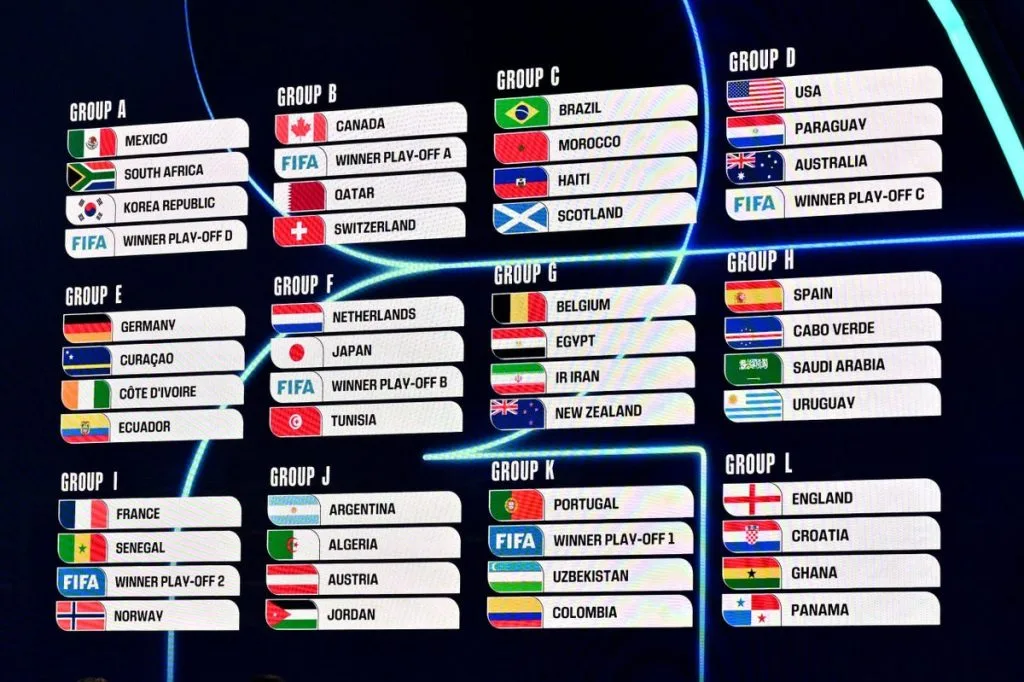
Which Tactical System Is Most Likely to Win World Cup 2026?
The tournament will offer a live test of the four dominant tactical philosophies in modern international football.
High pressing will be tested most severely by the format’s demands. Teams that press at maximum intensity across group stage matches risk arriving in the knockout rounds with depleted physical reserves. The adaptation — trigger-based pressing that conserves energy while maintaining the structural benefit — will separate sophisticated pressing teams from those who simply run at the ball.
Possession dominance is Spain’s entry in this debate. The evidence from Euro 2024 suggests that pure positional play, when executed with individual quality in the final third, can still dominate elite opponents. Spain’s 72% possession in their qualifying warm-up against Serbia is a data point, not a prophecy — but it suggests the machine is functioning.
Counter-attacking football is arguably the most efficient system in knockout tournaments, because it requires fewer moments of quality to win a match. France and Brazil have both built their campaigns around this principle. A team that defends well, maintains shape, and has Mbappé or Vinicius in space needs relatively few opportunities to win a match 1-0.
Hybrid systems — the tactical approach that combines elements of all three — may have the highest ceiling in this tournament. Scaloni’s Argentina, for example, can press high, build through possession, and counter-attack, depending on game state and opponent. The ability to shift between tactical identities within a match is the hardest thing to prepare for.
The evidence from major tournaments suggests that hybrid systems adapted to their opponents rather than imposing a single identity tend to win the biggest prizes. Spain’s ability to add verticality to their possession, and France’s capacity to build through the press rather than always bypassing it, may ultimately make them the two most likely winners — because both can adapt in ways that more rigid systems cannot.
Predicted Tactical Power Rankings
- Spain — The deepest midfield in the tournament, the best wide-player pairing, and a defensive record that suggests the system is functioning at a high level. If Rodri and Yamal are fit, Spain have the highest tactical ceiling.
- France — The broadest squad depth and the most dangerous transition threat. Mbappé’s spatial disruption of defensive systems is a tactical advantage that no other team in the tournament can replicate. The creative gap left by Griezmann prevents them from topping the list.
- England — The most improved team under a new manager, with genuine defensive solidity and an outstanding spine. Tuchel’s omissions in attack leave a gap in tight spaces, but England’s organized shape and physical quality make them dangerous in knockout football.
- Argentina — The reigning champions’ structural solidity and collective pressing remain underrated. The Messi question is the critical variable. With him, Argentina should be higher. Without him, the creative ceiling drops.
- Brazil — Ancelotti’s structured approach has given Brazil a cleaner tactical identity than they have possessed for many years. The forward line, built around Vinicius, is capable of winning any match. The central midfield questions prevent a higher ranking.
- Portugal — Consistently underrated, consistently organized, and carrying one of the most creative number tens in the tournament in Bruno Fernandes. At their best, they can beat any of the teams above them.
- Germany — Wirtz at his peak gives Germany a creative dimension they have lacked since the golden generation. The build-up quality is there; the final-third finishing remains the uncertainty.
- Netherlands — Van Dijk’s leadership and Gakpo’s movement provide quality enough for a deep run. Consistent execution across seven or eight consecutive matches has historically eluded them.
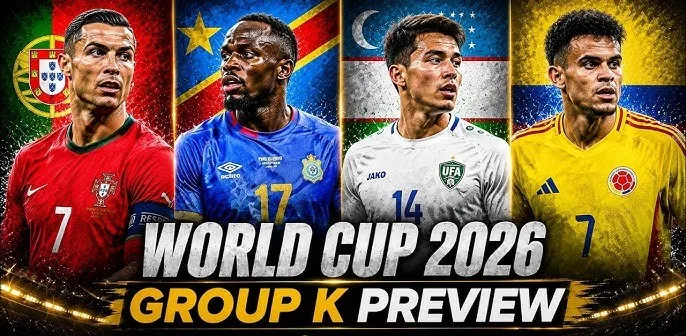
Key Battles to Watch at World Cup 2026
Spain’s Possession vs. France’s Transitions — The probable defining tactical matchup of the tournament. Spain will seek to control the ball and create in the half-spaces; France will compress space, invite possession, and release Mbappé into the channels behind Spain’s midfield in the moments when the transition occurs. Each second of this game will represent the central tension of modern international football.
England’s Midfield Control vs. Elite Pressing Teams — Tuchel’s compact 4-2-3-1 has worked against lower-quality opposition. Against teams that press England’s build-up from the front — Argentina, Germany, Portugal — Rice’s role as the transition cutter and Anderson’s press-resistance will be examined at their maximum intensity.
Brazil’s Creativity vs. Structured Defenses — Ancelotti’s counter-attacking system depends on Vinicius finding space in transition. When organized defensive teams — Morocco or possibly Argentina in the knockout rounds — drop into a 4-4-2 block and deny him those transitions, how Brazil find alternative routes to goal becomes the critical question.
Argentina’s Collective Pressing vs. Spain’s Build-Up — If these sides meet in the knockout rounds, it will represent a test of two of the most collectively sophisticated systems in the tournament. Argentina’s press-triggering mechanism, refined over four years, against Spain’s press-resistant midfield — this would be a genuine tactical battle between two of the game’s best-organized sides.
FAQ
What is the best team tactically for World Cup 2026?
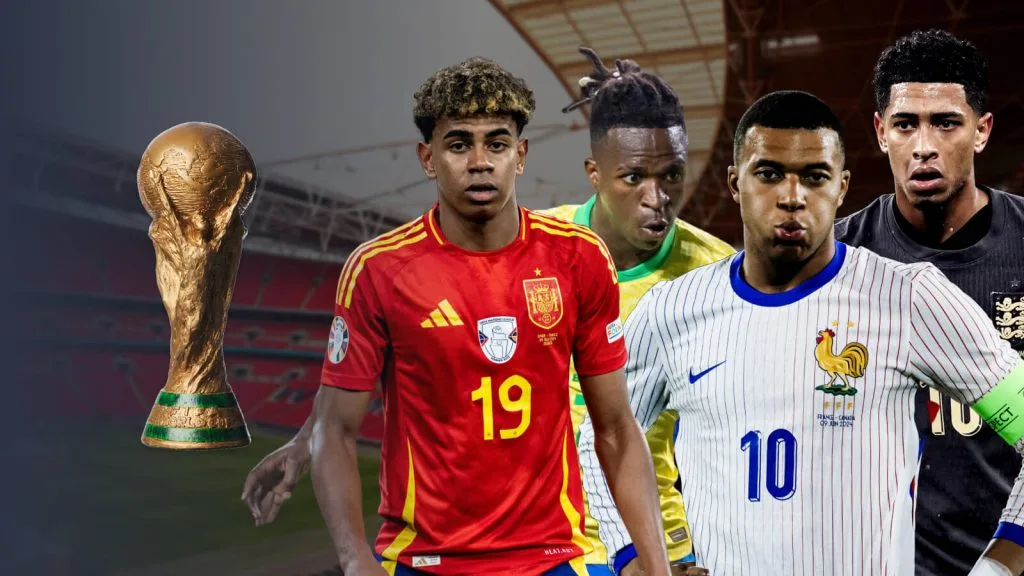
Spain have the strongest tactical case heading into the tournament. Their 4-3-3 system built on midfield control, with Rodri protecting from deep and Lamine Yamal and Nico Williams creating unpredictability in wide areas, is the most complete tactical structure in the competition. France’s counter-attacking model and squad depth make them the strongest challenger.
Who are the favorites to win World Cup 2026?
Spain and France are the joint favorites in most betting markets, with England, Argentina, Brazil, and Portugal all positioned as genuine contenders. Spain lead prediction markets with approximately 16% probability, followed by France and England each just above 12%.
What tactical trends will define World Cup 2026?
Transition football, hybrid formations, trigger-based pressing, and set-piece optimization will define the tournament. The 48-team format places a premium on tactical flexibility and squad depth, meaning teams that can adapt their approach across a longer campaign will have a structural advantage over those reliant on a single tactical identity.
Can Argentina defend their title?
Yes, though the probability is lower than their pre-tournament standing might suggest. Only Italy in 1938 and Brazil in 1962 have successfully defended the World Cup. Scaloni’s tactical adaptability and the collective pressing cohesion of his squad give Argentina a genuine structural foundation. The Messi uncertainty is the most significant variable — with him in the squad and fit, their attacking ceiling rises considerably.
Will Spain dominate possession again?
Yes. Spain’s entire tactical identity is built on possession structure, and de la Fuente has shown no interest in abandoning it. The key evolution for 2026 is whether Spain can be more vertical and decisive in the final third — using the individual quality of Yamal and Williams to break down organized defenses rather than circulating possession until the opening presents itself.
Conclusion: The Most Tactically Sophisticated World Cup Ever?
There is a reasonable case that the 2026 World Cup will be the most tactically rich tournament in the competition’s history — not because the teams are necessarily stronger than previous generations, but because the tactical education level across international football has never been higher.
The coaches assembling in North America — Deschamps, de la Fuente, Tuchel, Scaloni, Ancelotti — each represent a different tradition of football thinking, and each has found coherent solutions to the central problems of modern international football: how to build possession under pressure, how to defend without surrendering transition moments, and how to convert technical superiority into decisive actions in the final third.
Spain appear best prepared tactically. Their midfield architecture, their wide-player quality, and their collective pressing structure represent the most integrated tactical system in the tournament. The Rodri fitness situation is the genuine variable; if he plays the tournament fit and at his best, the rest of the contenders are chasing Spain.
The tactical approach most likely to win is the hybrid: the team that can possess when possession is available, counter when the space is there, press when the trigger appears, and defend from a structured shape when the match demands it. Spain and France are the two clearest exponents of this principle. Argentina and Portugal, in their different ways, offer versions of the same adaptability.
What makes 2026 different, ultimately, is the expanded format’s implicit demand for tactical intelligence over raw talent. A squad that cannot adapt — that has one speed, one shape, one answer for every question — will be exposed somewhere across a seven or eight-game campaign. The teams that arrive understanding this, that have built their systems around flexibility rather than a single tactical identity, are the teams that will be standing in the final in July.
Based on the available tactical evidence, Spain and France are those teams. One of them will almost certainly lift the trophy. Which one probably depends on how a handful of transition moments, in one high-stakes knockout match, are decided.
That, in the end, is football — and why we watch.
For further reading, see our guides to the World Cup 2026 Format Explained, What Is a Half-Space in Football, What Is Positional Play, What Is an Inverted Fullback, and What Is a Double Pivot.
For Newsletter or Email us: hello@sportsexpress.site